
Physiotherapy Massage in Kraków (Pain, Tension, Recovery)
Not a “spa massage”. This is targeted, clinical hands-on work designed to reduce pain, release overload and help your body recover — with clear guidance on what to do next for longer-lasting results.
Most common reasons to book
• Neck and shoulder tightness from desk work / stress
• Upper back stiffness, “between the shoulder blades” pain
• Low back overload, tight hips, heavy legs
• Headaches with muscle tension (neck/jaw involvement)
• Sports fatigue: heavy muscles, delayed recovery, stiffness after training
• Postural strain, repetitive overload, “everything feels tight” periods
• Support during rehab: when pain/tension blocks exercise progress
If your symptoms suggest a medical red flag (sudden severe pain, fever, neurological symptoms, major trauma), we’ll advise you on the right medical route first.
What makes this massage “physiotherapy-based”
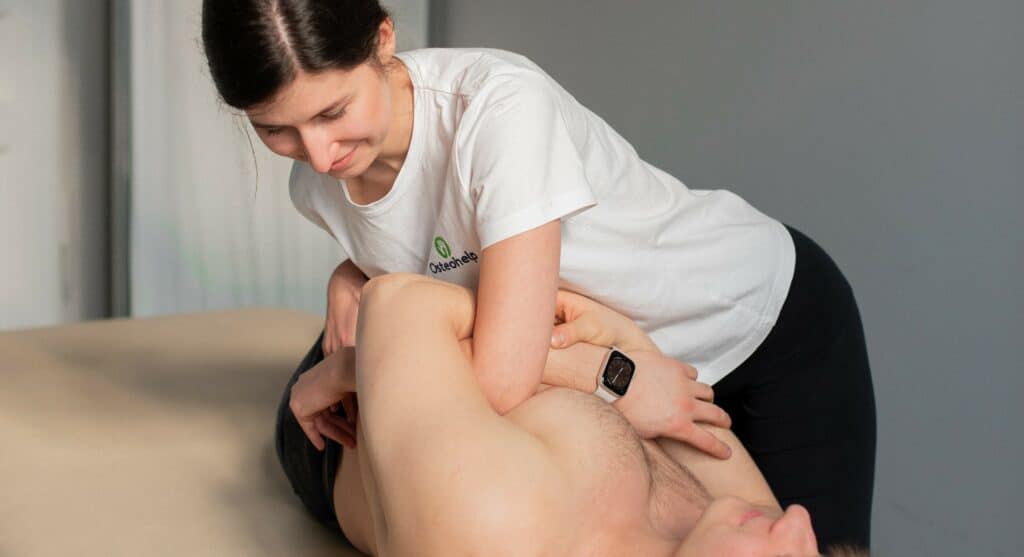
We choose pressure, technique and target tissues based on your symptoms and function — not a fixed routine. The goal is to change how you move and feel, not just to “relax”. When needed, we combine massage with simple mobility or activation so your body holds the benefit longer.
Physiotherapy massage: what it is — and what it isn’t
Physiotherapy massage is a targeted therapy focused on pain modulation, muscle tone balance and tissue recovery. It can reduce protective guarding, improve local circulation and make movement feel easier — especially when your body is overloaded by work, stress or training.
What it isn’t: a “one-size-fits-all” relaxation ritual or a solution that replaces active rehab. When massage is part of a plan (mobility + strength + load management), results tend to be faster and more stable.
What we assess before we start
We ask a few focused questions to understand your pain and your load: what triggers symptoms, what relieves them, how you work/train, and what you want to achieve. Then we quickly check key movement patterns to choose the best tissues and techniques.
Common focus areas:
• neck and upper trapezius / levator scapulae (desk overload)
• chest and anterior shoulder (rounded shoulders, breathing restriction)
• thoracic spine and rib mobility (stiff mid-back, “stuck” posture)
• hips and glutes (low back load, running/cycling overload)
• calves/hamstrings (heavy legs, sport recovery, plantar overload)
What you get after the massage
You should feel lighter, looser and more comfortable — but we also want you to keep it. That’s why we give you a few precise “next steps”: a stretch, a mobility drill, an activation cue or a recovery strategy that matches your day.
Between-visit guidance may include:
• a 3–6 minute mobility reset for the area we treated
• simple activation to “teach” the body the new range
• micro-break strategy for desk work (to stop tension rebuilding)
• recovery tips for training (timing, easy flush work, sleep support)
How the appointment looks
1) Quick check & goal setting
We pinpoint where your pain/tension comes from and what you want from the session: relief, mobility, or recovery after training.
2) Targeted physiotherapy massage
We work precisely on the tissues driving symptoms — adapting pressure and technique to your sensitivity and goals.
3) Recovery plan for home
You get 2–3 simple actions to keep the benefit: mobility, activation, hydration/sleep cues, or desk micro-breaks.
Book an appointment
Michał Moskwa
Physiotherapy Massage / Pain & Tension Relief
Martyna Samek
Physiotherapy Massage / Recovery Support
