
Sports Osteopathy in Kraków (Performance, Recovery, Injury Rehab)
Train hard — recover smarter. We combine osteopathic assessment with sport-focused manual treatment to improve movement efficiency, reduce overload patterns, and support a faster, safer return after injury.
Athletes book most often for
• “Heavy legs”, tight calves/hamstrings, slow recovery between sessions
• Hip and low-back overload from running, cycling, strength training
• Shoulder restriction / impingement-like pain (gym, climbing, racket sports)
• Ribcage stiffness and breathing limitation affecting endurance output
• Recurrent strains and “same spot keeps coming back” issues
• Post-injury return: after sprains, muscle tears, fractures, surgeries
• Sport-specific overuse (shin splints, ITB, plantar overload, tendinopathy)
We support your training plan — not replace it. When needed, we coordinate with imaging, ortho or sports medicine so you train safely and progress with confidence.
What makes our sports approach different
We don’t chase symptoms — we chase performance-limiting mechanics. We assess how you produce force, where you compensate, and what tissues are overloaded. Then we use osteopathic manual therapy to free up key joints and soft tissues, and translate it into practical training guidance so results last.
Sports osteopathy: what it is — and what it isn’t
Sports osteopathy is a clinical, hands-on approach tailored to athletes and active people. It focuses on restoring the mobility and coordination your sport requires — so your strength and conditioning work converts into better performance, not just more fatigue.
It isn’t a shortcut that replaces rehab or strength work. Manual therapy is most effective when it supports the right loading plan: return-to-run, return-to-lift, mobility + stability, and smart recovery.
What we assess during the visit
We start with sport context: training volume, recent intensity spikes, past injuries, sleep/recovery, and performance goals. Then we test sport-relevant movement patterns (not just “where it hurts”) to find mechanical bottlenecks.
Common performance-limiting areas:
• ankle/foot mechanics (push-off, impact tolerance, plantar load)
• hip rotation and pelvic control (stride, squat depth, power transfer)
• thoracic spine & ribcage mobility (breathing, rotation, overhead work)
• shoulder/scapula mechanics (pressing, throwing, swimming)
• neck/jaw tone and breathing pattern (recovery and “system stress”)
What you get as an athlete
You get pain relief when needed — but the bigger win is clarity. You’ll understand why a body part keeps overloading, what to modify in training, and what to do between sessions to accelerate recovery.
Support often includes:
• recovery strategies (breathing, mobility, tissue load management)
• return-to-sport progression guidance after injury
• warm-up tweaks that match your limitations
• technique cues to reduce compensation patterns
• when appropriate: referral for imaging / ortho / sports medicine
How the appointment looks
1) Sport-specific assessment
We identify where your movement leaks energy or overloads tissues — and what’s limiting your next performance step.
2) Osteopathic manual treatment
Targeted techniques to restore mobility, reduce protective guarding and support tissue recovery — adapted to your training phase.
3) Recovery & return-to-sport plan
You get practical next steps: warm-up tweaks, mobility/activation, load management cues — so progress continues between visits.
Book an appointment

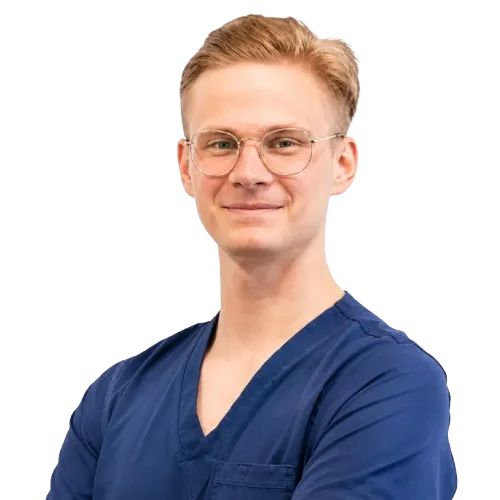
Michał Ciepała, M.Sc. PT, D.O.
— Sports Osteopath & Physiotherapist
Michał Ciepała is a Master of Physiotherapy and a certified osteopath (D.O.) who focuses on athlete care. A graduate of the European Academy of Sport Osteopathy (2021–2022), he combines hands-on clinical practice with a strong understanding of sports biomechanics.
His work goes beyond symptom relief. Michał prioritizes thorough assessment to identify the root cause of pain, injury, or movement restrictions and to address biomechanical inefficiencies. With extensive postgraduate training—including HVLA techniques, Kinetic Control, and advanced post–traumatic brain therapy (Endocranial Spasm)—he supports patients with acute sports injuries, concussions, post-surgical recovery, and chronic pain.
Whether you’re returning after an injury or aiming to improve performance, Michał creates an individualized recovery plan to help you get back to training safely and effectively.
